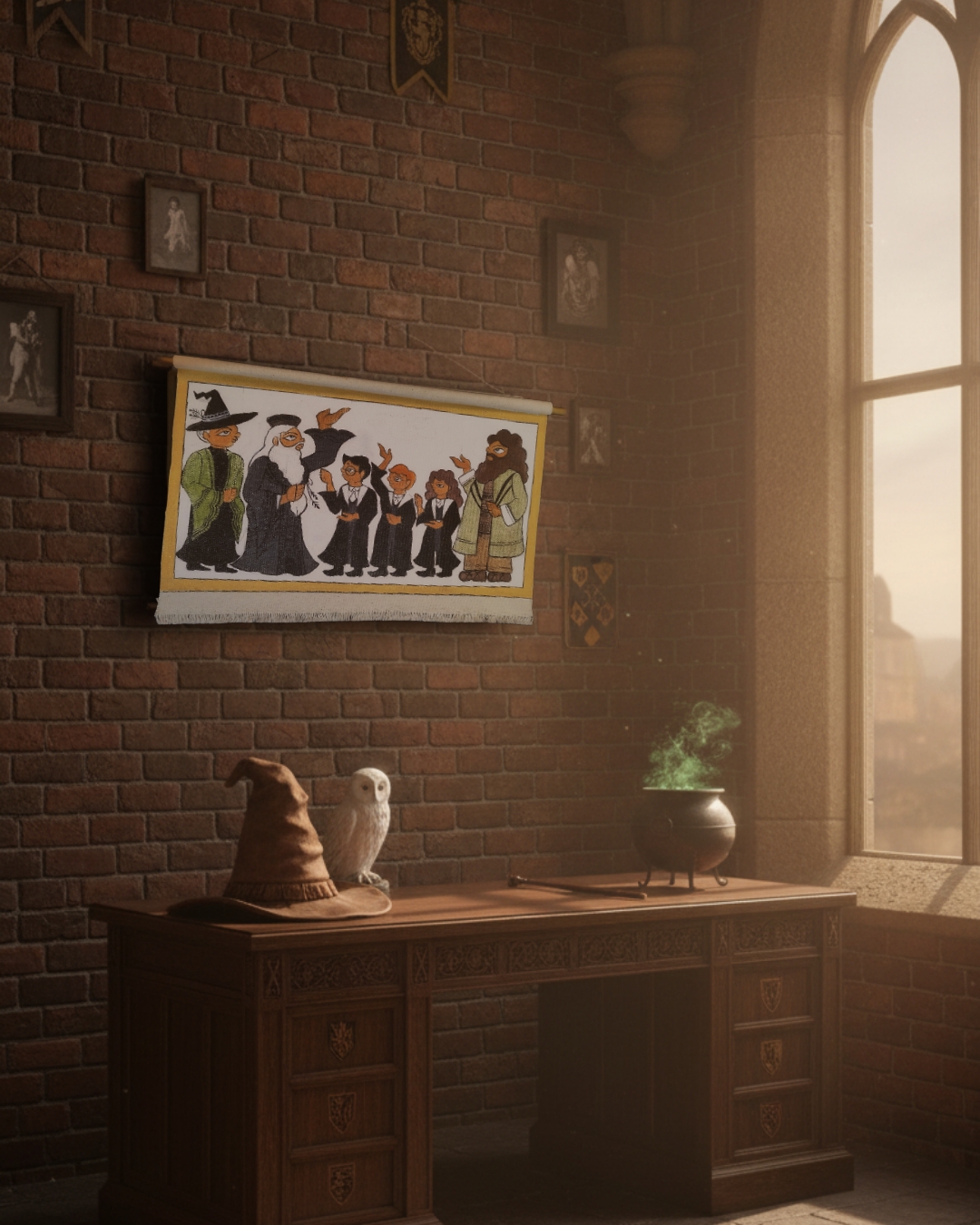
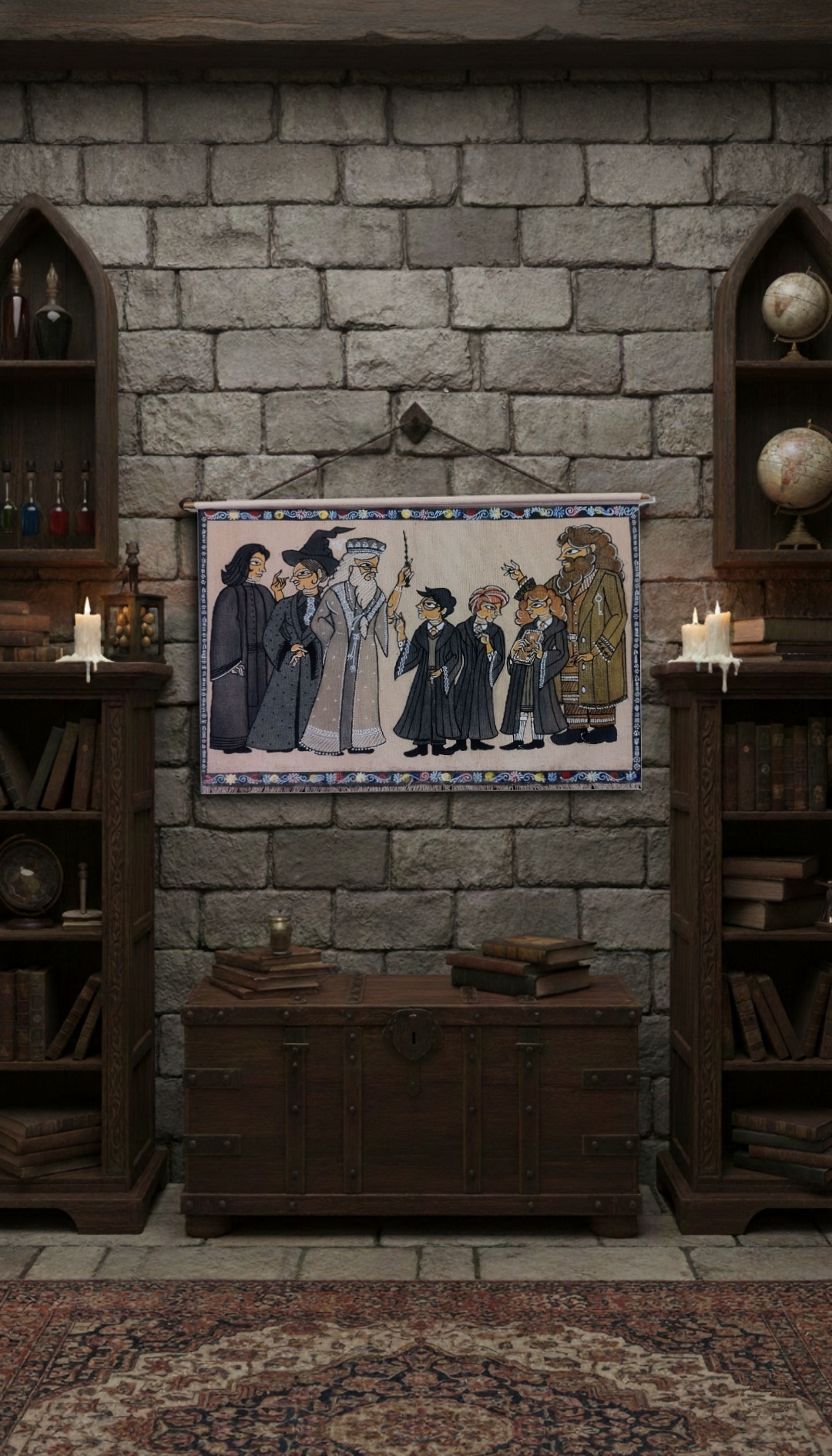
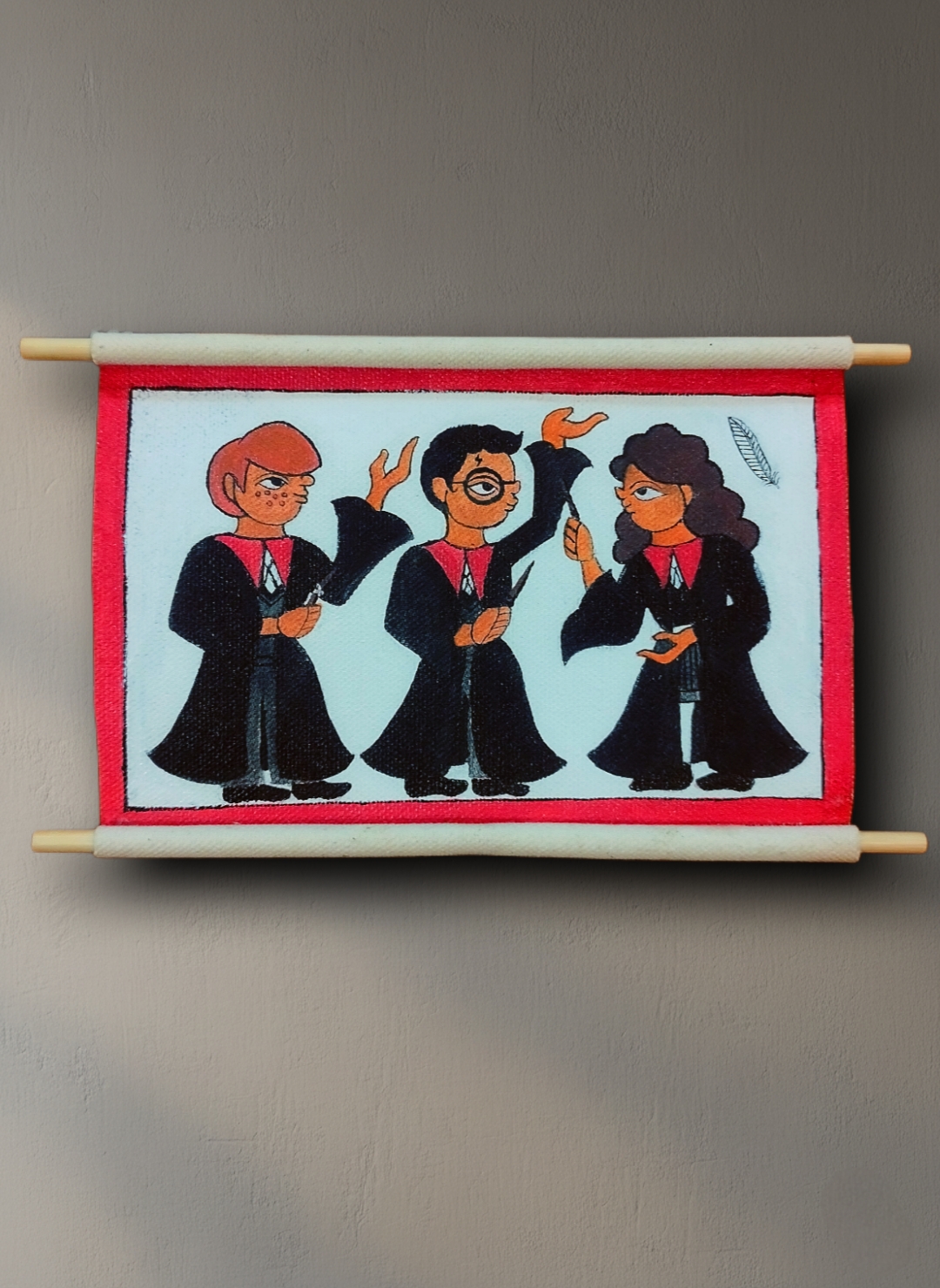
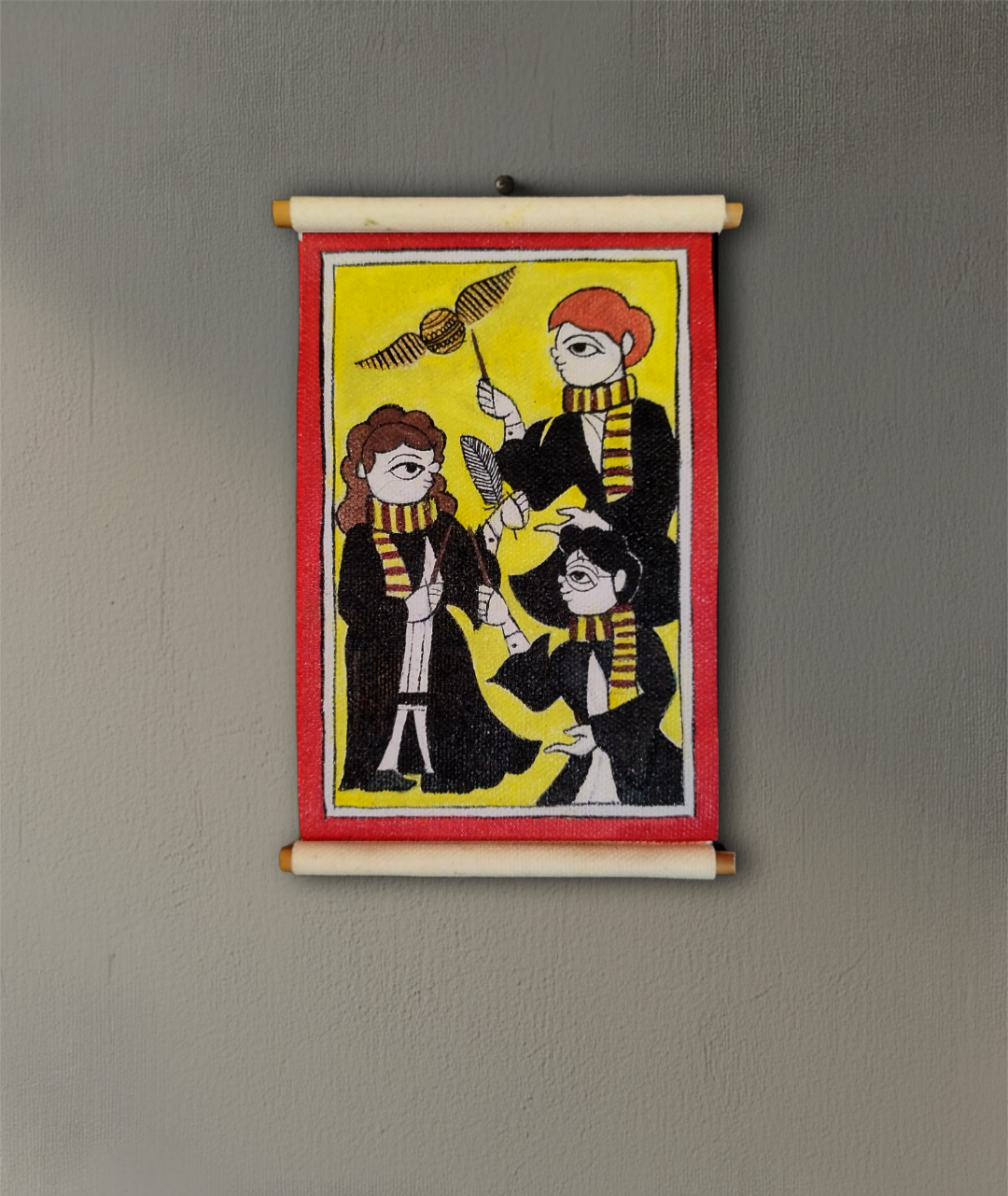
Description
Phad painting is a traditional style of religious scroll painting and folk art that originated in Rajasthan, India.
- Scroll Narratives: It is traditionally painted on a long piece of cloth or canvas, known as a ‘phad’ (meaning ‘fold’ in the local dialect). These scrolls serve as a mobile temple and a backdrop for epic narratives.
- Theme: The paintings primarily depict the stories and heroic deeds of local folk deities, often covering every inch of the canvas with figures and scenes.
- Performance Art: Historically, the scrolls were carried by priest-singers called Bhopas and their wives, Bhopis, who would unroll them after sunset and narrate the stories through song and performance, pointing to the relevant scenes on the Phad.
- Style: Key features include flat perspective, bold lines, and vibrant natural colors (like red, yellow, and orange) used symbolically. Figures are typically shown in profile and their size indicates their social status or importance in the story.
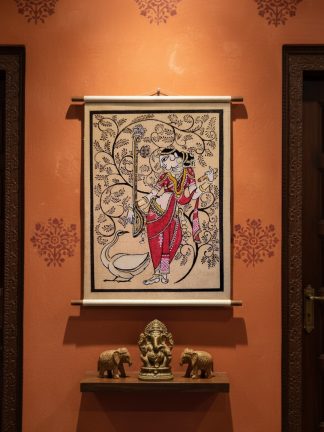
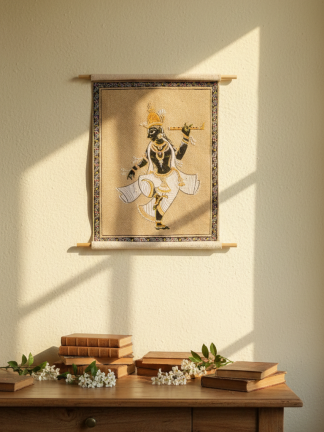
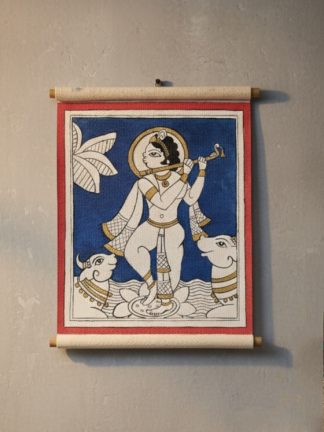
Pattachitra Painting is a traditional style of Indian painting that originated in Odisha and parts of West Bengal, with roots tracing back to ancient temple culture, particularly associated with the Jagannath Temple of Puri.
Temple-Centric Folk Art:
Pattachitra (from patta meaning cloth and chitra meaning picture) was traditionally painted by chitrakar families. These paintings were created on specially prepared cloth or palm leaves using natural pigments and were closely tied to ritual practices, temple storytelling, and religious festivals.
Theme:
The art is deeply devotional, predominantly depicting Lord Jagannath, Balabhadra, Subhadra, and scenes from the Krishna Leela, Ramayana, and Mahabharata. Mythological narratives, divine processions, and cosmological themes form the core subject matter.
Cultural & Narrative Function:
Pattachitra paintings served as visual aids for oral storytelling and religious instruction. They preserved mythological traditions and conveyed moral, spiritual, and philosophical ideas to the community, especially during temple rituals and village performances.
Style:
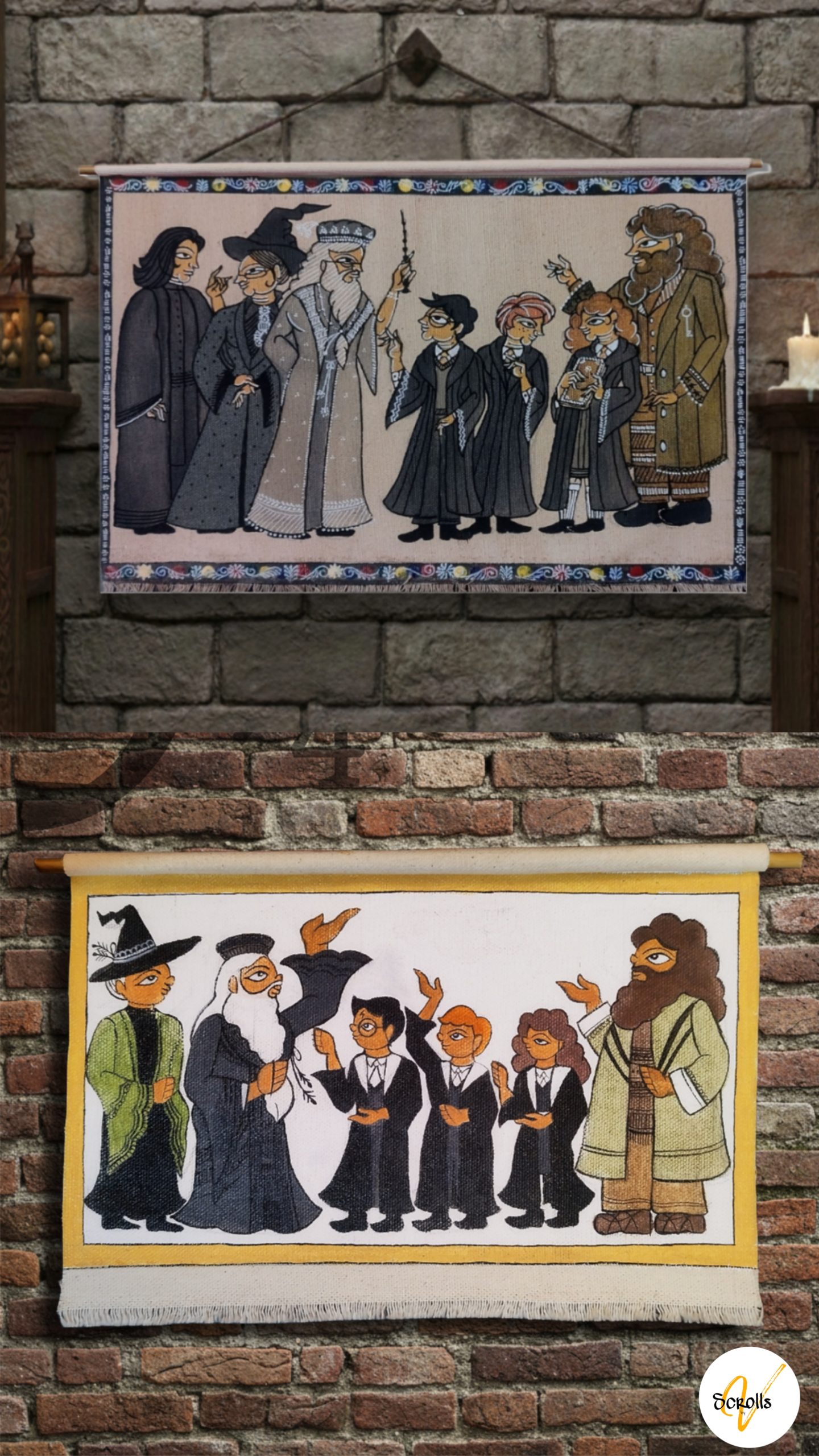
Marked by intricate detailing, bold outlines, and flat compositions, Pattachitra is known for its ornamental borders, rhythmic patterns, and stylized figures with elongated eyes. There is minimal use of perspective or shading. Colors are vivid yet earthy, traditionally derived from minerals, stones, shells, and plant sources.
Technique & Materials:
The cloth is prepared with a coating of chalk and tamarind seed gum, polished to a smooth surface before painting. Brushes are handmade, often from animal hair or plant fibers, reflecting a highly disciplined and time-intensive process.
Continuity and Legacy:
Unlike many folk traditions, Pattachitra has survived and adapted over centuries. Today, artists continue the tradition while expanding themes to include contemporary subjects and new formats. Pattachitra stands as a vital link between classical temple art and living folk practice, influencing modern Indian visual culture and design.